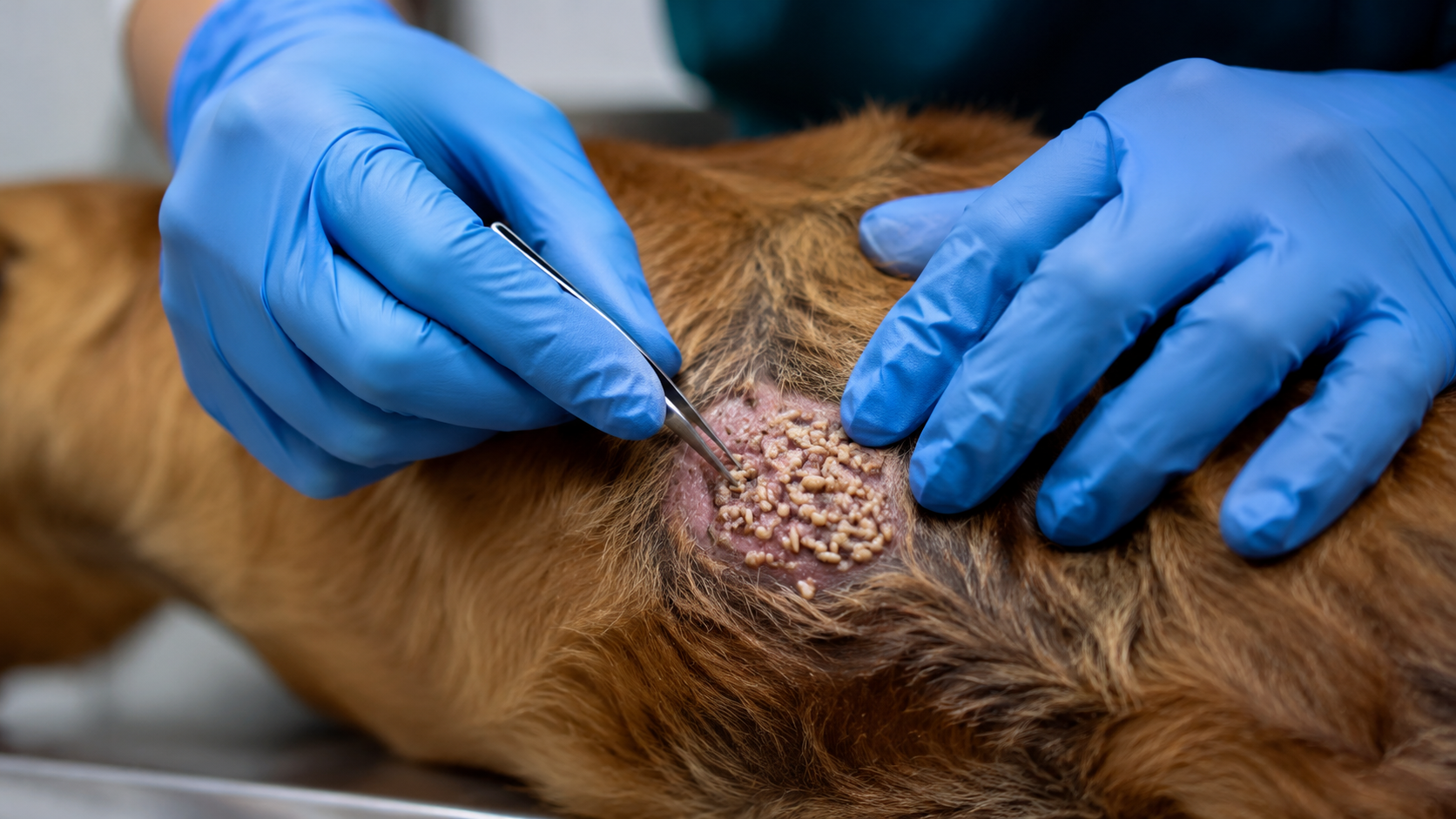
At first glance, the image is shocking. Beneath the fur, dozens of pale, wriggling larvae crowd together inside an open wound. It looks unreal, almost like something from a horror scene—but this is a real medical condition known as myiasis.
Myiasis happens when flies lay eggs on damaged skin, open wounds, or dirty, moist areas of the body. When the eggs hatch, they become maggots, feeding on dead or living tissue. It is more common in animals, especially when wounds are left untreated, but it can also affect humans in poor hygiene conditions or neglected injuries.
What makes myiasis dangerous is not just the appearance. The larvae can deepen the wound, cause severe infection, pain, swelling, bad odor, and tissue damage. In animals, the affected area may become red, wet, and painful. The animal may lick, scratch, become weak, stop eating, or show signs of distress.
The good news is that myiasis can be treated—but it needs quick action. A veterinarian or doctor must carefully remove the maggots, clean the wound, treat infection, and protect the area from more flies. Trying to pull them out roughly at home can make the injury worse.
Prevention is simple but important: clean wounds early, keep animals dry and hygienic, check their skin regularly, and protect them from flies—especially in warm weather.
This image is disturbing, but it carries an important message: a small wound should never be ignored. What begins as a simple cut can quickly become a living infestation if left untreated. Early care can save comfort, health, and sometimes even life.